

How AI-Powered Shopping Transformed BFCM 2025: A Deep Dive into alby’s Data
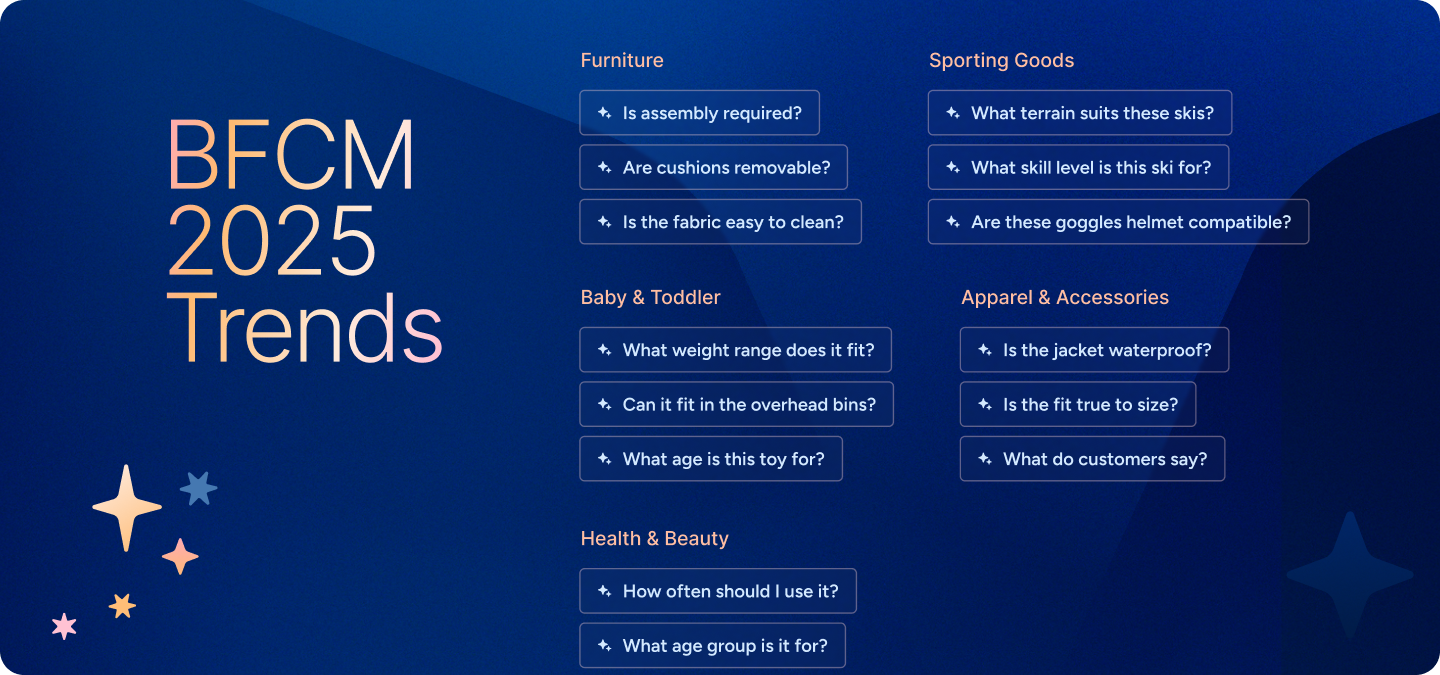
This Black Friday and Cyber Monday, we saw AI shaping a new way of buying. Shoppers used alby to navigate overwhelming assortments, compare features, and feel confident enough to click “buy.”
In total, shoppers asked alby more than 1 million questions during BFCM, and those who engaged were 46% more likely to convert. That lift isn’t theoretical, it’s based on millions of real interactions across leading retail brands.
Below, we break down what shoppers asked, how they behaved, and what these trends tell us about the future of AI-assisted ecommerce.
AI is the New Product Expert
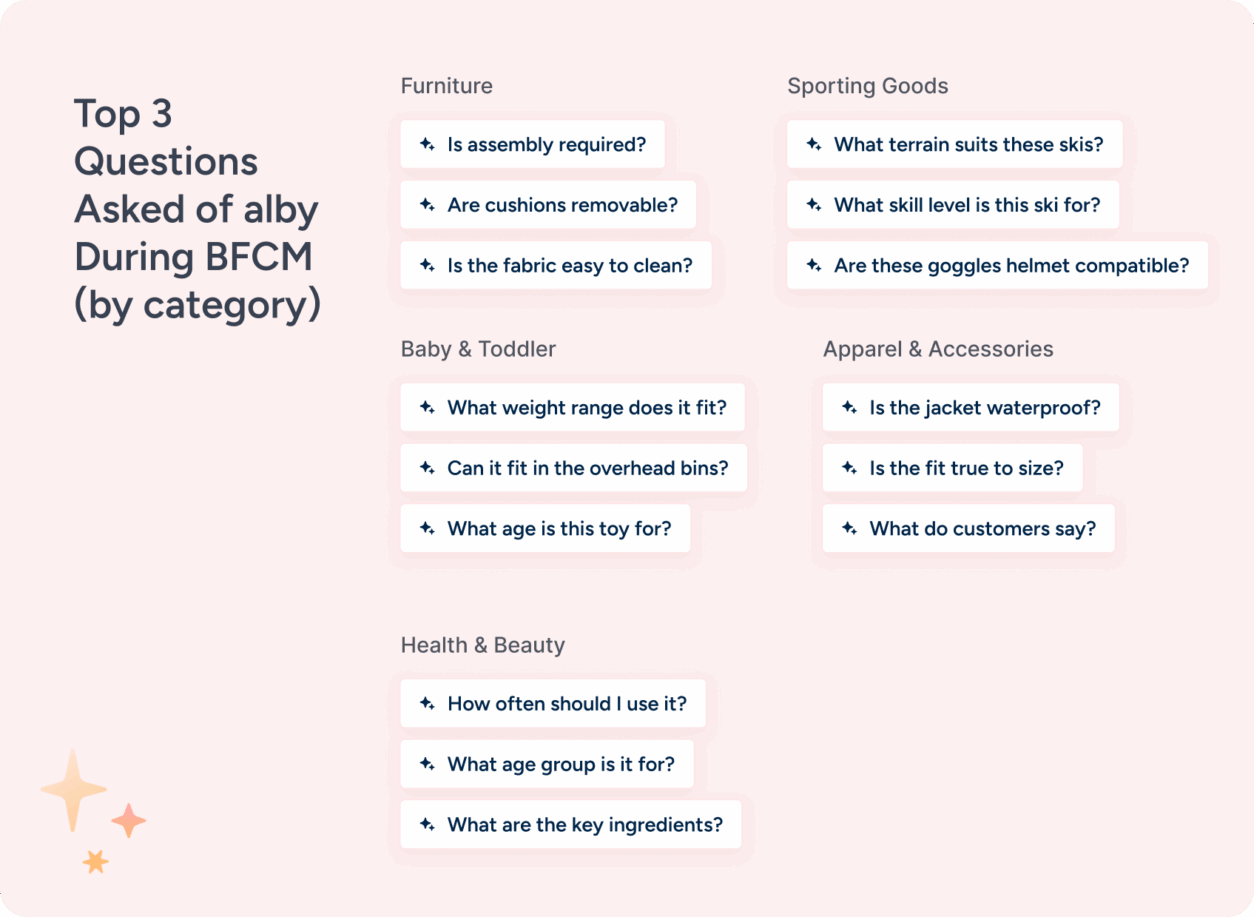
What shoppers asked alby during BFCM reveals something powerful: AI is now the first place consumers turn for the nuanced, confidence-boosting details they need before buying. Across every vertical, shoppers leaned on AI to resolve the exact friction points that typically stall purchases online: fit, safety, performance, setup, quality, and compatibility. Here are some of the themes we saw across categories:
1. Shoppers used AI to validate high-stakes decisions before checking out
Across furniture, baby gear, and technical sporting goods, shoppers overwhelmingly asked alby about risk-heavy product attributes. Such as weight limits, installation requirements, safety certifications, terrain suitability, and compatibility with existing equipment. These are questions traditionally answered by in-store experts, and their volume online signals a major shift:
AI has become the trusted advisor shoppers consult before committing to big-ticket or high-liability items.
2. Fit uncertainty remains the #1 barrier in ecommerce, and AI now closes that gap
Sizing, real-world fit, comfort, and wearability emerged as dominant themes across apparel and accessories. Shoppers used alby like a virtual fitting room, asking whether items run true to size, how they fit on different body types, and whether they’re suitable for all-day wear. This behavior reflects a broader trend:
Consumers expect personalized, human-like fit guidance, even when buying at peak speed during BFCM.
3. Shoppers used AI to translate technical product language into plain-English advice
For gear-heavy categories like winter sports, alby became a translator, turning specs like flex ratings, terrain designations, and compatibility notes into simple, actionable guidance. This underscores a bigger story:
AI isn’t just answering questions, it’s democratizing expertise traditionally limited to niche retail specialists.
4. Safety validation surged, especially among parents and giftgivers
Parents buying car seats, strollers, toys, and travel gear asked alby to confirm FAA approval, age ranges, height/weight limits, and product suitability. This trend suggests:
Consumers increasingly rely on AI as a real-time safety check, especially when purchasing high ticket items during peak sale periods.
5. Seasonality shaped questions, showing AI understands context shoppers care about
With winter approaching, alby saw a spike in questions about waterproofing, insulation, durability, and cold-weather performance across categories. Shoppers didn’t want generalized product info, they needed to know whether something would perform right now, in real conditions. This highlights AI’s value in quickly adapting product information to seasonal needs and urgency.
A Clear Takeaway: AI is Now Core to the Purchase Decision
These insights show a dramatic behavioral shift:
Consumers now expect retailers to answer questions instantly. The 46% conversion lift validates that shoppers who get those answers buy with far more confidence.
alby’s Impact on Conversion: A 46% Lift
One of the most compelling findings from BFCM was just how significantly AI engagement influenced checkout behavior. Across Bluecore’s retail customers:
- Shoppers who used alby were 46% more likely to convert
- Freeform, natural-language questions increased 57%
- alby handled more than 1 million conversations in just a few days
This aligns with broader signals across the industry: consumers who interact with AI, whether in product search, chat assistance, or guided shopping tools, tend to convert at dramatically higher rates. The reason is simple: confidence converts. And AI is now one of the most effective ways to give shoppers the clarity they need.
What This Means for Retailers Heading Into 2026
This BFCM proved that AI is no longer a novelty or a side-channel. It’s a core conversion driver.
Here’s what retailers should take away from this year’s data:
1. Product clarity is the new currency.
Shoppers don’t want to buy blind. They want specifics like fit, assembly, compatibility, ingredients, return details. Retailers who surface this info instantly, via AI, win.
2. The era of AI-guided commerce has officially begun.
From Walmart to Amazon to emerging DTC brands, AI shopping tools became mainstream this year. Retailers without them risk falling behind.
3. The quality of the AI matters.
The increase in freeform questions suggests shoppers expect natural conversations, not rigid decision trees or pre-set flows. Retailers that invest in truly conversational AI will see the strongest results.